Creating high-converting ad campaigns is one of the most critical skills for any business aiming to grow online. Whether you’re running ads on Google, Meta, or TikTok, success depends on more than just launching a campaign—it requires strategy, testing, optimization, and continuous management.
In today’s competitive digital landscape, brands that fail to optimize their campaigns waste budget, miss opportunities, and fall behind. This guide will walk you through everything you need to know to create and manage high-converting ad campaigns, from planning to scaling.
What Are High-Converting Ad Campaigns?
A high-converting ad campaign is a marketing campaign designed to maximize conversions—whether that means sales, leads, sign-ups, or app installs—while minimizing cost per acquisition (CPA).
Key Characteristics:
- Targeted audience segmentation
- Compelling ad creatives
- Optimized landing pages
- Data-driven decision making
- Continuous A/B testing
Why High-Converting Campaigns Matter
Running ads without a conversion strategy is like pouring water into a leaking bucket. You may get traffic, but not results.
Benefits:
- Higher ROI (Return on Investment)
- Lower CPA (Cost Per Acquisition)
- Better audience insights
- Scalable growth opportunities
According to a reliable resource from HubSpot: conversion rate optimization
conversion rate optimization can significantly increase marketing efficiency without increasing ad spend.
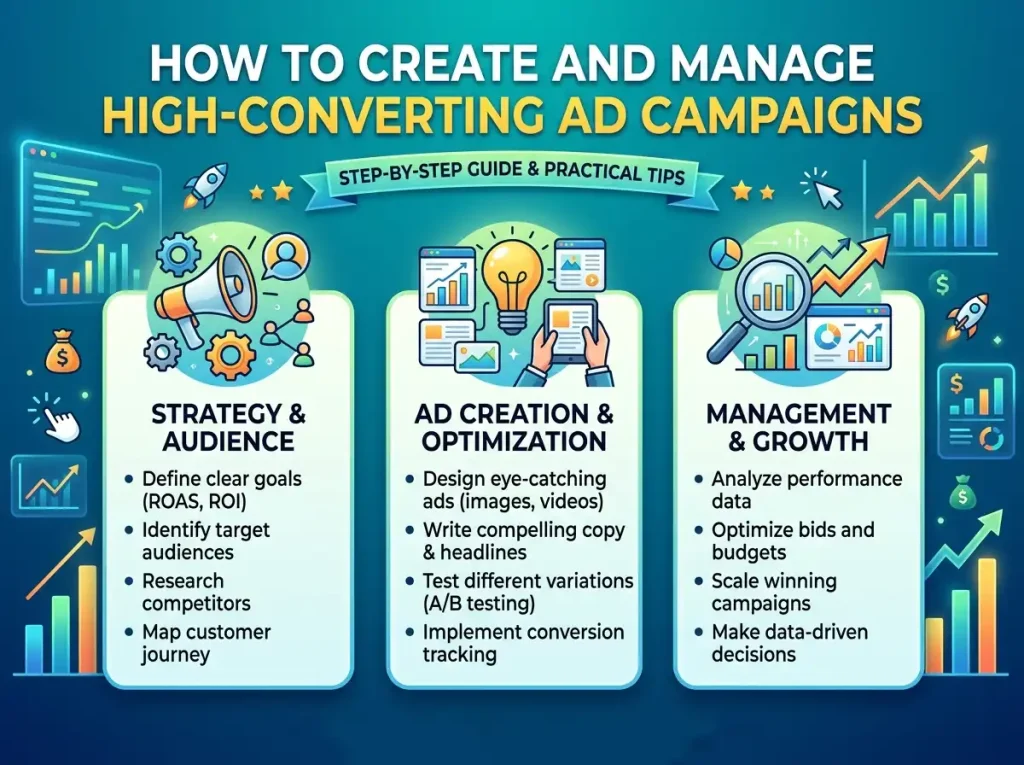
Step-by-Step Guide to Creating High-Converting Ad Campaigns
1. Define Clear Campaign Objectives
Before launching any campaign, define what success looks like.
Common objectives include:
- Lead generation
- E-commerce sales
- App downloads
- Brand awareness
Tip: Align your objective with platform-specific goals (e.g., conversions in Google Ads or Meta Ads).
2. Know Your Target Audience
Audience targeting is the backbone of high-converting ad campaigns.
Key targeting methods:
- Demographics (age, gender, location)
- Interests and behaviors
- Custom audiences (retargeting)
- Lookalike audiences
3. Craft Compelling Ad Creatives
Your ad creative determines whether users click or scroll past.
Best practices:
- Use strong headlines
- Include a clear value proposition
- Add emotional triggers
- Use high-quality visuals or videos
- Include a strong CTA (Call-to-Action)
4. Optimize Your Landing Page
Even the best ad won’t convert if your landing page fails.
Essential elements:
- Fast loading speed
- Mobile responsiveness
- Clear headline and offer
- Trust signals (reviews, testimonials)
- Simple conversion form
5. Use the Right Ad Platforms
Different platforms serve different goals.
| Platform |
Best For |
Strengths |
| Google Ads |
Intent-based search |
High conversion intent |
| Meta Ads |
Social targeting |
Advanced audience segmentation |
| TikTok Ads |
Viral engagement |
Creative-driven conversions |
Managing High-Converting Ad Campaigns
Creating campaigns is only half the job—management is where real performance happens.
1. Monitor Key Metrics
Track the right KPIs:
- CTR (Click-Through Rate)
- Conversion Rate
- CPA (Cost Per Acquisition)
- ROAS (Return on Ad Spend)
2. A/B Testing (Split Testing)
Testing is essential for improving performance.
What to test:
- Headlines
- Ad creatives
- Target audiences
- Landing pages
- CTAs
3. Budget Optimization
Allocate your budget strategically.
Tips:
- Scale winning campaigns
- Pause underperforming ads
- Use automated bidding strategies
4. Retargeting Strategy
Retarget users who didn’t convert the first time.
Retargeting benefits:
- Higher conversion rates
- Lower cost per conversion
- Improved brand recall
Common Mistakes to Avoid
Even experienced marketers make mistakes that reduce campaign performance.
Avoid these pitfalls:
- Targeting too broad or too narrow audiences
- Ignoring data and analytics
- Using weak creatives
- Sending traffic to poor landing pages
- Not testing enough variations
Comparison: Basic vs High-Converting Campaigns
| Feature |
Basic Campaign |
High-Converting Campaign |
| Targeting |
Generic |
Highly segmented |
| Creatives |
Average |
Optimized & tested |
| Landing Page |
Generic |
Conversion-focused |
| Data Analysis |
Minimal |
Continuous optimization |
| ROI |
Low |
High |
How KayoAds Helps You Build High-Converting Campaigns
At KayoAds, we specialize in building and managing high-converting ad campaigns that deliver measurable results.
Our Competitive Advantages:
- Suspension-proof accounts: Run ads without worrying about unexpected account bans
- Instant balance top-ups: Never pause campaigns due to payment delays
- 24/7 dedicated human support: Real experts ready to assist anytime
- Verified accounts: Increased trust and stability across platforms
Integrated Services for Maximum Performance
To achieve the best results, your ad campaigns should be part of a complete digital strategy.
Recommended internal services:
- Agency Accounts (Google, Meta, TikTok) for stable and scalable advertising
- SEO Services to complement paid traffic with organic growth
- Web Design Services to improve landing page conversions
- Account Suspension Recovery to restore disabled ad accounts
Pro Tips for Scaling High-Converting Campaigns
Once you find a winning campaign, scale it carefully.
Scaling strategies:
- Increase budget gradually (20–30%)
- Expand to new audiences
- Duplicate winning ad sets
- Use lookalike audiences
- Test new creatives while keeping proven ones
Final Thoughts
Building high-converting ad campaigns is not about luck—it’s about strategy, execution, and continuous optimization. By focusing on audience targeting, compelling creatives, optimized landing pages, and data-driven decisions, you can significantly improve your campaign performance.
Partnering with experts like KayoAds ensures you not only launch campaigns but also scale them efficiently with minimal risk and maximum return.
If you’re serious about growth, it’s time to move beyond basic advertising and start building campaigns that truly convert.